One of the reasons I leapt offline and away from the public eye was that I was glitching. My brain had this trapdoor in it that, when opened, would take me out of the present moment and into another place and time. It’s like a rip would happen and I’d find myself in 2022 or 2008, completely disoriented and preoccupied with things that have been resolved for a while.
The doctors call it a “flashback.”
I call it, extremely inconvenient.
I’m being flippant. Flashbacks are painful, unpleasant, and horrible. I knew a little about them from the old story they tell you about veterans who hear fireworks and “flashback” to war, in a magical derealization where you think you’re somewhere you’re not.
I thought it was a hallucination.
It is not. Or mine were not. My flashbacks felt like being flooded with shame and terror for reasons I didn’t quite understand, but felt imminent and urgent. That torrent of terror would activate my nervous system which would respond accordingly, and I’d find myself in fight, flight, freeze, or fawn in the middle of a coffee shop surrounded by lovely people with no danger in sight.
It is more disorienting than hallucinatory. You can still function and know you’re in a coffee shop in 2026, even if your body thinks it is in 2008. But you don’t function well. Or at least, I didn’t.
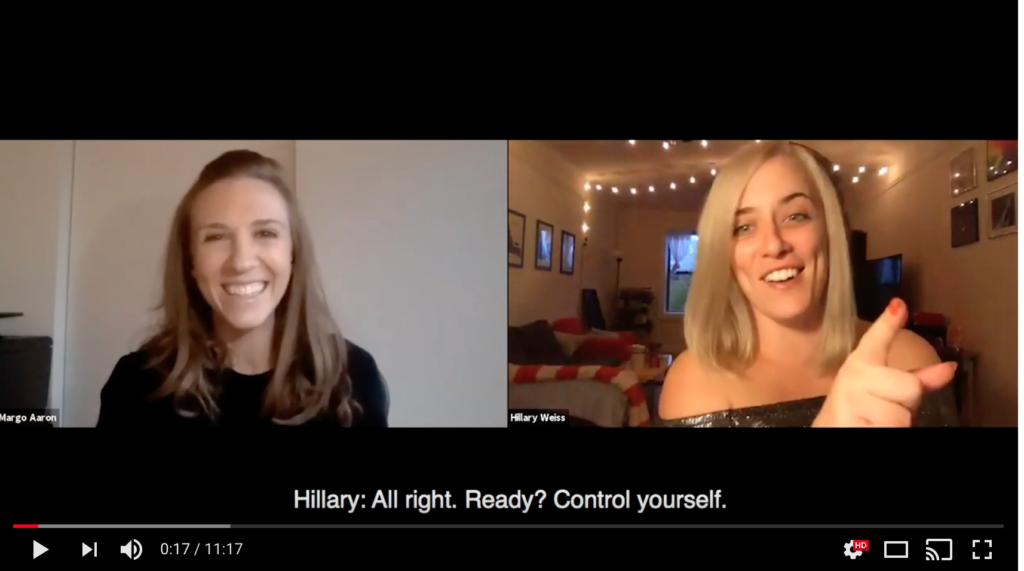
I was being interviewed one day on camera and the interviewer asked me an ordinary question I’d been asked a million times and I went completely blank. There was no thread to pull on, no bank of memories or information I could pull from, no ability to improvise or pivot. All I found inside my mind was empty space.
They call this a “freeze” response.
It is a strange thing to not be able to find your thoughts.
For a long time I thought this meant that I was inept, destined to a life of – honestly I had no idea. What can you do if you intermittently and unexpectedly lose access to your own mind???
Turns out they have entire field of mental health dedicated to addressing this problem, and into the abyss I went.
I learned how to “regulate” and “do somatic work” as the cool kids say. I identified “triggers” and learned all the appropriate buzzwords so I could use them and email them to you.
But the best thing I did was a self-imposed form of exposure therapy: I got back on stage.
About two years ago I signed up for a speaker training course for third generation Holocaust survivors (HMU if you’re a 3G and you want to learn about this). The goal was to humanize the Holocaust by connecting dates and locations students were learning in class, to real people and real stories.
My grandfather was a Holocaust survivor and I knew his story. So I signed up and started speaking.
The first time I spoke, I had the room in tears.
The next time I spoke, I had a flashback.
Um.
When I tell you, I bombbbbbbed.
I bombed so hard, someone came up to me afterwards to let me know just how shocked and disappointed he was because he’d heard me speak before and expected it to be better. He demanded I console him for this let down.
I laughed.
I knew what had happened.
The talk wasn’t a reflection of my skill or personhood. It was simply an unfortunate consequence of having a traumatized mind that was out of practice. The cool thing about minds is they’re plastic. What I needed to do was go back to the psychological gym and work out this muscle.
So, I did.
It’s been two years since that moment. I’ve spoken to dozens of classrooms and been invited back to stages I thought I’d never see again. The flashbacks still happen. Less intensely, less frequently. But they happen. I have tools now I didn’t have then for how to come out of them, or more accurately: function within them.
I get asked to speak regularly now and I know I might have a flashback, and I say yes anyway.
The worst that could happen is I go blank.
The best is that I crush the talk.
I’ll take that gamble.
Margo
PS: The worst that can happen is actually a bit worse, but to me blanking on stage is the worst. I’m not worried about hyperventilating or vomiting on stage, as people are generally amiable and understanding when it comes to physical maladies.
It’s the invisible ones that people are less sympathetic to.
My nervous system doesn’t consult me before it decides to go haywire but I do have a choice in how I respond to what it does. And the more I speak, the stronger the muscle becomes.